Showing posts with label austen. Show all posts

Friday, March 7, 2014

Pride and Prejudice Performed

It's a balmy 45 degrees Fahrenheit outside today - and sunny! :-P It was so warm that, even though I still wore my warm coat, I rolled down the windows in the car while driving.

Spring is COMING, even after this crazy polar vortex. Have hope! My heart is about to burst.

On a completely different note, my homeschool group's theater company is putting on a performance of Pride and Prejudice!

Thin Ice Pride & Prejudice flyer_100989.indd


I am in it, but I am only a random person at the ball, so that is of little matter. 
The more important thing is that it is a rather excellent production, and that if you happen to be around the Chicago area, you should come see it! :-) 

And whether or not you are from 'round here, you should still stop by to the website and "like" the Facebook page:
On the site, you can see the trailer (which is awesome) and purchase advance tickets (though they will be available at the door as well).

My sister is playing a fantastically chatty Mrs. Bennet. Here is her cast photo. See, she will cry if you don't come!

Photo: You don't want to miss this young lady as Mrs. Bennet in Pride and Prejudice!


Wednesday, January 15, 2014

Austen Dudes: Captain Frederick Wentworth

Okay, I know I said last time that Mr. Knightly was my favorite (and he is and has been since I first read Emma years ago), but Captain Wentworth has been gradually catching up over the last few years. Whether or not he will surpass Mr. Knightly is yet to be seen, though there is a definite possibility of a tie...

Persuasion is interesting because the first bloom of love is gone, and the story is all about the rekindling after a long separation. None of the other Austen books look into this side of the story - the closest one gets is with Sense and Sensibility, I suppose, and that's not even that close. It makes sense that Persuasion deals with a more mature heroine and a less "first-love" plot - Austen wrote it later in her own life. However, it seems to me that there is the most "first-love" awkwardness on both sides in Persuasion than there is in any other of her books.

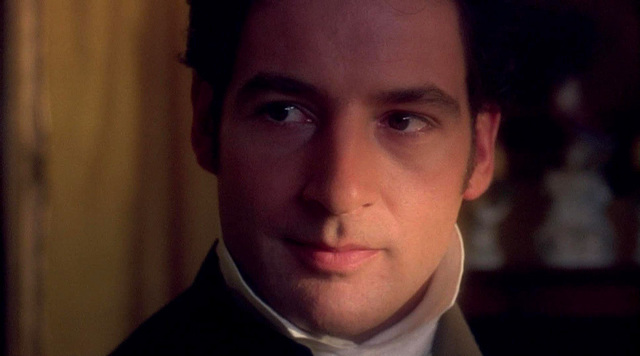
Okay, on to Wentworth.


The big word with Wentworth throughout the book is constancy. Even though Anne refuses him the first time, he still loves her, and will always love her, forever, no matter what. Luckily, it all turns out happily. But seriously, that's a pretty awesome love.

One thing I want to talk about are the "Cancelled Chapters." Austen's original ending to persuasion was different from what was ultimately published.
(If you want to read the "Cancelled Chapters" click HERE. And HERE for the published penultimate chapter.)

It is the second to last chapter that most differs. In the original version, there was no conversation with Harville about love and constancy, no hastily written letter from Wentworth in all desperation.
The original chapter is a little less romantic and a little more - cute? awkward? I'm not quite sure how to put it.

If you haven't read the link, it involves a direct conversation between Wentworth and Anne, one in which Wentworth (rather flustered) addresses Anne as the definite bride of Mr. Elliot. Anne denies this, of course (equally flustered) and an adorable reconciliation follows.

Though I agree with Austen that the new chapter has more flair and appeal than the old one, there is something rather nice about the first version. I went to see a musical of Persuasion a few years ago and they somehow managed to include in the adaptation BOTH scenes. I don't remember how they did it, but it was awesome. (By the way, I'd like to note that the show was three hours long...)

Even though I do like the "Cancelled Chapters," there are two reasons why I like the revised ending more.
Firstly, the whole letter thing is so romantic and cute.
But secondly, I really appreciate that Austen added the conversation with Harville. It really emphasizes constancy in love, an important theme throughout the books. If persuasion provided the conflict, constancy provided the resolution.

If you've read Persuasion, what did you think of Wentworth? Since this is our last Austen hero, which is your favorite?

~Sophia

Here are my previous posts on Austen dudes:
George Knightly from Emma
Edmund Bertram from Mansfield Park
Charles Bingley from Pride and Prejudice
Henry Tilney from Northanger Abbey
Edward Ferrars (and Colonel Brandon) from Sense and Sensibility
Fitzwilliam Darcy from Pride and Prejudice


Tuesday, January 7, 2014

Austen Dudes: Mr. Knightly

We have finally come to my absolute favorite Jane Austen hero.
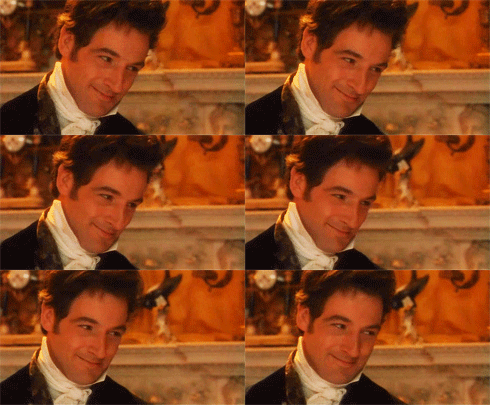
(Mr. Knightly in Emma 1996)
There's a lot of talk at the end of Emma about who is the more lucky in various relationships, and I will always, always, always agree with Emma when she says that the good fortune's all on her end.
Someday - maybe - Emma may grow to deserve Mr. Knightly. He is sweet, sensible, caring, organized, kind, and witty. He is quite the gentleman; he has a fine sense of humor; he is one of the people vital to Mr. Woodhouse's well-being; he respects people's feelings and is sympathetic; he really wants to help Emma overcome her flaws and become the best person she can be. 
What more can you ask for?
Okay fine, he's also handsome and has a big house and a lot of money. And did I mention he's a really good dancer? But all that's just icing on the cake, really. 
Seriously, Mr. Knightly is just perfect. 


The fact that he did watch Emma grow up, and was almost a big brother to her, made me question their relationship the first time I read Emma, a few years ago, but now I realize that he's very much so a best friend and the only person that truly understands her - except for Mrs. Weston, maybe, but she, like everyone else, spoils Emma. He is the supreme voice of reason in Emma's life, the one and only person close to her who does NOT think her the definition of perfection. 
"Mr. Knightly, in fact, was one of the few people who could see faults in Emma Woodhouse, and the only one who ever told her of them..."
Emma needs Mr. Knightly for her psychological and emotional well-being. He keeps her on the right path.

In conclusion, my favorite quote from Emma:
"He [Mr. Knightly] had found her agitated and low. --Frank Churchill was a villain.-- He heard her declare that she had never loved him [Churchill]. Frank Churchill 's character was not desperate. --She was his own Emma, by hand and word, when they returned into the house; and if he could have thought of Frank Churchill then, he might have deemed him a very good sort of fellow."
I would also like to mention in passing that Frank Churchill, though truly "a very good sort of fellow," with the best of intentions, seemed not as grounded or sensible as Mr. Knightly. Frank Churchill was rather irrational sometimes, and in his marital situation, he clearly has all the good fortune. Emma was right when she said that she and Frank Churchill are alike in their destiny: "The destiny which bids fair to connect us with two characters so much superior to our own." Jane Fairfax is a marvelous, steady, and sensible young lady. She will clearly be the voice of reason in that household.

~Sophia

Here are previous Jane Austen dude posts:
Edmund Bertram from Mansfield Park
Charles Bingley from Pride and Prejudice
Henry Tilney from Northanger Abbey
Edward Ferrars (and some Colonel Brandon) from Sense and Sensibility
Fitzwilliam Darcy from Pride and Prejudice


Friday, December 6, 2013

Austen Dudes: Edmund Bertram

Fanny is the ultimate friend-zoned heroine, I think. Sister-zoned.

Edmund disappoints me slightly, probably because he is awesome and has potential to become an epic hero. In the beginning, he's the only one that Fanny can count on, that doesn't ignore her, that actually considers her as a human being. Edmund shares Fanny's values, her love of nature and reading - he's actually the one who instilled these in her - and he helps her come out of her shell of shyness.
You'd think that a guy so noble, upright, and honorable like Edmund wouldn't be blinded by someone like Miss Crawford. You'd think that Edmund would see from the beginning that Fanny was made for him - they belong together.

But then there'd be no story. I just feel terrible for Fanny who tells herself that she'd be happy if Edmund fell in love with someone who deserved him.

It's the end that really bugs me. This story somehow doesn't match up to the romance of Austen's other novels. Edmund realizes Miss Crawford has a couple too many flaws to overlook, and it's just impossible for them to marry. But he says that he will never find a woman like her.
But this is Jane Austen, and there has to be a Happily Ever After, so of course Edmund realizes that Fanny has always been there for him, and that he loves her.

But seriously. The entire story has been about Fanny's disappointment at Edward's love of Miss Crawford and then suddenly in the last 5% of the book it flips around and Edward basically says, "Well, I suppose Fanny is great. Hm. Yeah, actually, I think I'll marry her, now that Miss Crawford is out of the question."
It's wrapped up so quickly. There's no budding romance on his side - we see it all from Fanny's perspective, and though Edmund's change from Miss Crawford to Fanny may have taken some time, in words it only adds up to about three sentences.

Not cool, Austen, not cool.

This is why Edmund disappoints me. There's no romance on his side. Fanny seems to be just his second choice when Miss Crawford is deemed dishonorable.

This may not be the real case, of course, but the brevity of words with which Austen deals with the situation just seems to minimize the importance.

Ugh. And Edmund is such an awesome guy - he just needs someone to slap him into some sense.

~Sophia

My other Austen Dude posts:
~Charles Bingley from Pride and Prejudice
~Henry Tilney from Northanger Abbey
~Edward Ferrars (and a nod to Colonel Brandon) from Sense and Sensibility
~Fitzwiliam Darcy  from Pride and Prejudice


Thursday, December 5, 2013

Austen Dudes: Charles Bingley

I'm in a bit of a rush so you will just get a short post on Bingley. I finished Mansfield Park yesterday and started on Tale of Two Cities. Because I've decided I just can't read two books at once, I'm going to take a short break from Austen for the first few weeks of December, and then hopefully return to Emma and Persuasion before the year ends.
_________________________________________________________________________________
Bingley is not a main hero, but I thought he deserved a post anyway.


Bingley (from Pride and Prejudice) is a cheery sort of fellow, one that seems good to have at parties.

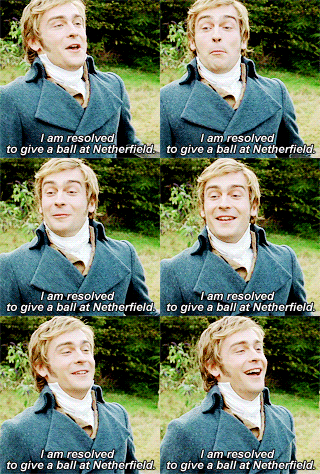
(see post script)
I really do rather like him - he's kind and pleasant and funny and upbeat.
There's just one flaw, and that is his humility (which is technically a virtue, but...).

He is so humble and disregards his own opinion so much that he has become rather guided by the whims of his friend (Darcy). I personally would not want to marry him because I wouldn't like a husband who was so much influenced by everyone.

But I would totally love to have him as a friend. We'd have parties ALL THE TIME.

Fun stuff.

~Sophia

My other Austen Dude posts:
~Henry Tilney from Northanger Abbey
~Edward Ferrars (and a nod to Colonel Brandon) from Sense and Sensibility
~Fitzwiliam Darcy  from Pride and Prejudice

Post Script: The gif is from the miniseries Lost in Austen which I vehemently DO NOT recommend. Do not watch it unless you are passive about having the books you loved flipped inside out and your beloved characters messed with.


Monday, December 2, 2013

Austen Dudes: Henry Tilney

I have a feeling this post is going to be rather short.

Henry Tilney from Northanger Abbey never made a big impact on me. He seems like an average fellow - nice, charming, pleasant, and very kind. (I suppose that isn't average, but in the world of Austen heroes - it is.) Now, I'm not saying he's not a good character - I have nothing bad to say about Henry - but nothing really stands out.

Perhaps it is the nature of the book. Catherine Morland, our heroine, is possibly the most naive heroine in Austen's work - except for Fanny, from Mansfield Park, perhaps. But the difference between the two is that Northanger Abbey seems to be told more from Catherine's point of view than Mansfield Park is from Fanny's.
So - we have a heroine who is out in the world for the first time, who reads gothic romance novels, and who wants to find her dashing hero.
Because we see Henry from this perspective, he seems rather bland compared to Catherine's envisioned dashing hero. Our hopes are disappointed.

But only slightly.
If we step back and look at Henry from a rational perspective (Elinor to the rescue!) we see a very decent fellow. He's mature, he's caring, he knows how to joke around in a pleasant way ("Muslin can never said to be wasted!"), and he loves his sister. He's also living in his own house (very responsible), and doesn't have an extravagant income or expense. He's hilarious, too. Overall, a really great guy.

So I guess that, since Northanger Abbey is a parody of a gothic romance, Catherine does get her dashing hero - except he's dashing in an everyday sort of way. And truly, that's the best way, right? (At least for us Elinors it is...) So I suppose Henry Tilney is pretty awesome after all.

I'd also like to add that I've discovered that there's a fan-made cult for Henry Tilney called The Cult of Da Man. :-)

~Sophia

Here are my other posts on Austen dudes:

~Edward Ferrars (and a nod to Colonel Brandon) for Sense and Sensibility
~Fitzwiliam Darcy (seriously, what is up with that name?) for Pride and Prejudice

Sunday, December 1, 2013

Austen Dudes: Edward Ferrars (and some Colonel Brandon too)

I had such fun writing the post on Mr. Darcy, that I thought I'd do one on every Jane Austen fellow!
Today it's going to be Edward Ferrars from Sense and Sensibility.

As you may remember, Elinor is the Austen heroine that I most connect with, and I like her guy much more than I like Mr. Darcy.
Edward Ferrars is a really decent fellow. He's calm, sensible, and loyal, and doesn't make too big a deal out of anything. Wealth doesn't matter to him - he's perfectly happy being a clergyman with a small house and yard of chickens. (This is a reference to the final scene in the 2010 miniseries - watch it. It is the most adorable thing ever. I tried to find a picture or video of it online, with no luck.)

He's rather shy, which isn't a bad thing, and his values are strong and he will stick to them 'til the end.

This is evidenced through his engagement to Lucy Steele. Even though he knows the engagement was a rash act from when he was younger, he insists on sticking to his engagement, because he doesn't want to hurt Lucy.

Personally, if I was in Elinor's situation, I'd be a little disappointed that my crush - who obviously likes me back - didn't break off his previous engagement immediately and rushes to my arms. This is the slight bit of me that is more Marianne poking its head out. But then the Elinor in me (which is much stronger than the Marianne) realizes that a fellow who is loyal to an engagement with a woman whom he does not love - just because he gave his word - will be even more loyal to a woman he does love. This is excellent proof that he is a man who keeps his word - no matter what. What more can you ask for?

Even though he isn't the main hero in Sense and Sensibility, I'd like to give a little nod to Colonel Brandon for being awesome. Both he and Edward get A's for commitment. Colonel Brandon loves Marianne even though she's spurned him and made fun of him when her mind was full of Willoughby. Both Edward and Colonel Brandon are such steady rocks for their respective ladies (though I think Marianne needs a rock more so than Elinor).

I've seen both film versions - the BBC miniseries and the film with Emma Thompson. Both are excellent.

This one has adorable Edward chasing chickens...
...Ah yes, but this one has SNAPE
So in the end, our heroines in Sense and Sensibility end up with some pretty great dudes.

Tomorrow - I'll write about Northanger Abbey and Henry Tilney.

What do you think of Edward - or of Colonel Brandon? If you're a lady - would you marry them? :-)

~Sophia

______________________________________________________________________

Postscript:  Today is the first day of this Tale of Two Cities Readalong... and I haven't even begun. I've been reading Mansfield Park. Guys, I really need some advice on how you folks read two books at once. I don't know how this is going to work. Help!!

Sunday, November 17, 2013

The Real Mr. Darcy


So who started the idea that Mr. Darcy was Prince Charming? The classic hero? The ideal man?

Colin Firth is awesome. Mr. Darcy is not.

C'mon guys. Seriously.
"I certainly shall not [dance]. You know how I detest it, unless I am particularly acquainted with my partner. At such an assembly as this it would be insupportable. Your sisters are engaged, and there is not another woman in the room whom it would not be a punishment to me to stand up with."
Is this your dream man? Someone that considers only the most stunning woman to be worthy of his attention? Someone that calls a cute girl "tolerable," just because she isn't Aphrodite?

Well, it definitely ain't mine.

Yes, Darcy does change by the end, but - we'll get to that later.

In the beginning, Darcy is attracted to Elizabeth because she is the only person who feels no inhibitions in teasing him. She is a drastic contrast to the flattering Miss Bingley.
However, Darcy is not afraid, because he considers himself too proud to even consider marrying someone of her status:
"He really believed, that were it not for the inferiority of her connections, he should be in some danger."
One trip to Hunsford later, Darcy decided that, despite her embarrassing connections, he can't dismiss his love for her. So he proposes:
"In vain have I struggled. It will not do. My feelings will not be repressed. You must allow me to tell you how ardently I admire and love you."
So far, so good. But then he says:
"Could you expect me to rejoice in the inferiority of your connections? - To congratulate myself on the hope of relations, whose conditions is so decidedly beneath my own?"
 Yeah, that's really going to recommend him to her. Totally. I mean, he's basically saying:
"Seriously, did you think that a fellow like me - with ten thousand a year - could even deign to glance upon a girl like you, with such a meager income. But that's what love does. It defeats even such insurmountable boundaries like those."
And he expects her to say yes! Is he out of his mind!?
Even disregarding all that about Wickham, and all Elizabeth's accusations - this sort of pride alone would not recommend a man at all.

So he learns his lesson. Elizabeth is not desperate like Miss Bingley. He realizes that he has to be sincerely nice (shocker) to get a girl to - just maybe - accept a proposal. And he realizes that he has just lost Elizabeth.

When he bumps into her at Pemberly, he desperately jumps at the chance to redeem himself.
Now, this switch doesn't completely make sense to me - but I've never been in love. Whatever it is, Darcy is a changed man: he saves Elizabeth's family (the one that was so embarrassing, remember) by paying his sworn enemy. And all because of Elizabeth? That's some strong love.

But think about it. Is he really all that changed?
Yeah, he's nice now. Yeah, he's not always criticizing people.
But the only reason he's not doing that is because he's afraid to lose Elizabeth.
Ultimately, he's still the same person:
"Elizabeth did all she could to shield him from the frequent notice of either, and was ever anxious to keep him to herself, and to those of her family with whom he might converse without mortification."
No way would I want to have a husband that was so - sensitive. Ugh. He's just as proud as he ever was - he just is learning how to hide it.

My hope is that, in time, Darcy will learn by doing, and he won't need the motivation of Elizabeth to be a nice person. And it is true that this pride is the result of his upbringing.

But, to all the girls who are out there looking for "their Mr. Darcy," let me suggest that they look for"their Edward Ferrars," or "their Captain Wentworth," or, most of all, "their Mr. Knightly."
Mr. Darcy isn't bad, but there are definitely better!

~Sophia

(Read my other posts on Austen Dudes here!)

Monday, October 28, 2013

Elinor


Preview

Finished Sense and Sensibility today. I'll not be writing much on it right now, but I thought I'd pop in to say that in all the times I've read it, I've never realized how similar I am to Elinor. So remarkably similar. 
I know everyone loves Elisabeth from Pride and Prejudice, and I do too, but Elinor is so similar to me in almost every way (except for the fact that my sister is only slightly like Marianne). 
And I would totally take a guy like Edward over Mr. Darcy any day.

More on that later.

On to Pride and Prejudice!

~Sophia

Tuesday, October 15, 2013

Lady Susan by Jane Austen // A Not-Very-Austen Heroine

Having previously read the more well known novels of Jane Austen, there there is one major difference I noticed comparing them and Lady Susan.


What I'm Reading

The rest of Austen's books, such as Pride and Prejudice and Emma, have for their main characters single women who are relatively kind-hearted, and - whether they know it or not - looking for a husband.

The title character of Lady Susan is a widow with a teenaged daughter. Lady Susan is also not in the least kind-hearted. The whole story is an exchange of letters between various character, and through this we see how Lady Susan is able to use her charming wiles (and excellent acting skills) to make everyone bend to her will. She's a powerful woman, and the reader begins to suspect that possibly - just possibly - the book might not have the characteristically happy Austen ending.

But of course, it does, because it is Jane Austen. It's even happy for Lady Susan, who seems to be able to make the best of things, even when her plans go awry. Most of the time you're rooting against her, but sometimes you feel just slightly sympathetic, and feel that maybe she is just a misunderstood soul after all.

But don't let that trick you. That's just Lady Susan's wiles working on you.

But if she can make you like her just by you reading a few letters, think how persuasive and charming she must be in real life. It's an intimidating thought.

~Sophia

Post Script: You may remember me mentioning the Classics Club - the challenge to read 50 classics in 5 years. I've decided to start it in about a week. Here's my list.

Wednesday, October 9, 2013

Love and Freindship by Jane Austen // Going Mad is Better Than Fainting

First off, I did not misspell the title. This is Austen's original spelling, so I thought I'd keep it, even though the cover below corrects it. The edition I read (the free Kindle one) kept all of Austen's original strange spellings and sometimes lack of punctuation.


How nice to read a short book in one day, after reading the long, yet unfinished saga of Westeros!

Love and Freindship is a short novelette composed of letters from Laura to her best friend's daughter, explaining to her the "Misfortunes and Adventures" she has experienced.
It is obviously one of Austen's younger works - her writing style has clearly not yet developed. Scenes are sometimes abrupt and short, and a few of the characters are never properly developed. There are some forced scenes, but that is mostly for comedic effect, as in one where Laura, her friend Sophia, and two random fellows that just happened to walk in all happen to be the grandchildren of a random old gentleman that is there as well, by his four different daughters. WHAT??

The whole book is obviously a parody of the concept of "sensibility" - the over-the-top response to any emotional influences. According to this parody, if anything unpleasingly startling occurs, the logical thing to do is to faint on the sofa (obviously). If your husband is trapped under a fallen carriage, the correct course of action is this:
1. Run up to the carriage screaming.
2. Implore him not to die, and with heartfelt words inquire how he came to be in this part of the country.
3. Choose one of two courses of action. (a) Faint (duh) or (b) go mad.
We learn by the end of the book that it is more beneficial to your health to choose (b) and go mad, because then you are actually exersizing by all that activity that being mad requires. If you faint on the cold ground (especially if you faint repeatedly), you are more liable to get a consumption and perish of it.
"Beware of fainting fits... Though at the time they may be refreshing and agreeable yet belieive me they will, in the end, if too often repeated and at improper seasons, prove destructive to your Constitution... Run mad as often as you chuse; but do not faint - "
Another course of action that "sensibility" requires is that you completely, unfailingly, and utterly go against your father's wishes, whatever they may be. He quite obviously does not know what is best for you, and even if you love the girl he wants you to marry, it would be a disgrace to your "sensibility" if you did. So what you do is you "gracefully purloin" all his money (because it is rightfully yours - you need it to do grand things with!) and go off to find yourself a wife.
My Father ... insisted on my giving my hand to Lady Dorothea. No never exclaimed I. Lady Dorothea is lovely and Engaging; I prefer no woman to her; but know Sir, that I scorn to marry her in compliance with your wishes. No! Never shall it be said that I obliged my Father.
I found this short book to be a nice little adventure and extremely funny. Almost every sentence is another comment on the stupidity of sensibility. You can see how this book was the precursor to the more serious Sense and Sensibility, which is also a comment on the same topic.

To conclude, some more of my favorite quotes. If I could, I would actually post the whole book here, as One Big Favorite Quote, but it's easier to just tell you to read it.
My Father started - "What noise is that," (said he.) "It sounds like a loud rapping at the door" - (replied my mother.) "it does indeed." (cried I.) "I am of your opinion; (said my Father) it certainly does appear to proceed from some uncommon violence exerted against our unoffending door." "Yes (exclaimed I) I cannot help thinking it must be somebody who knocks for admittance." "That is another point (replied he;) We must not pretend to determine of what motive the person may knock - tho' that someone DOES rap at the door, I am partly convinced."
_____________________________________________________________________
Convinced as you must be from what I have already told you concerning Augustus and Sophia, that there never were a happier Couple, I need not I imagine, inform you that their union had  been contrary to the inclinations of their Cruel and Mercenery Parents; who had vainly endeavored with obstinate Perseverance to force them into a Marriage with those whom they had ever abhorred; but with a Heroic fortitude worthy to be related and admired, they had both, constantly refused to submit to such despotic Power.
~Sophia

Postscript: I am generally not going to be writing reviews of the books I read through this Jane Austen "marathon," but for the first two I thought I would, because they are less well known. For the other six, I'll make some combined posts where I discuss Austen's works as a whole.

Monday, October 7, 2013

Jane Austen and Ghost Stories

I finished A Clash of Kings yesterday, and I think it's time for a little break.
The books are good, don't get me wrong, but goodness they are intense. And gruesome sometimes. And harsh.

And I really need something calm and sweet as a refresher, as a break in the series.

So, in honor of Pride and Prejudice's 200th aniversary of publication this year, I thought I'd reread all the Austen books - and read Lady Susan and Love and Friendship for the first time as well.
I have some fun posts planned for this, so stay tuned!

I thought I'd start today, but I just couldn't get into it. Not with the characters from A Clash of Kings pounding around in my head. My mind was very much in fantasy mode, and it needed something to make the transition to Regency novels.

So, at breakfast I read some stories from a "Humorous Ghost Stories Collection" that my sister had downloaded on my Kindle a while ago, and I had never read. They were the perfect thing to get me out of the land of High Fantasy - short, sweet, and funny, and a few were set in the early 1900's, which isn't exactly Regency, but was good enough.

Here are the stories I read:

"The Rival Ghosts" by Brander Matthews


"The Water Ghost of Harrowby Hall" by John Kendrick Bangs

I always love a funny ghost story. No horror for me! (Unless it's Poe)
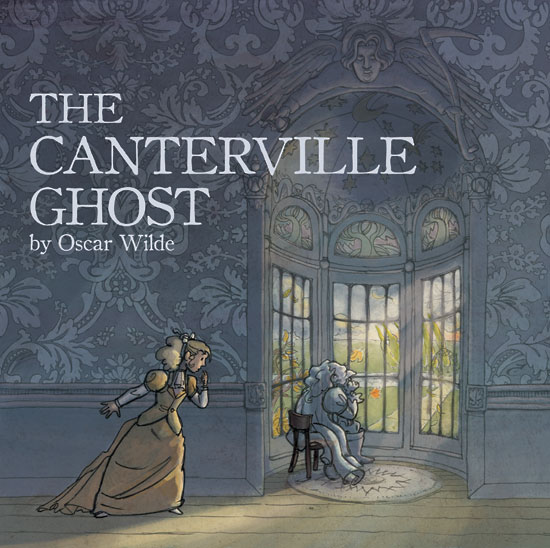
Another good Humorous Ghost Story that I am sure is in this collection is "The Canterville Ghost" by Oscar Wilde:


My favorite ghost story of all time. Funny, but sweet, with a certain depth to it.

Anyway, tomorrow I'll begin Love and Friendship, because I've decided to read Austen's books in roughly the same order as she wrote them. But, because she would write drafts of stories, abandon them to work on other drafts, and then pick up the first ones again, it's all sort of a mix up.
Here's the order I will read them in:

Love and Friendship
Lady Susan
Sense and Sensibility
Pride and Prejudice
Northanger Abbey
Mansfield Park
Emma

You are welcome to read along with me and discuss your opinions and views of the books in the comments of this and the following posts.

(Also, if you have a "better" order to suggest than the one above, please let me know below!)

~Sophia